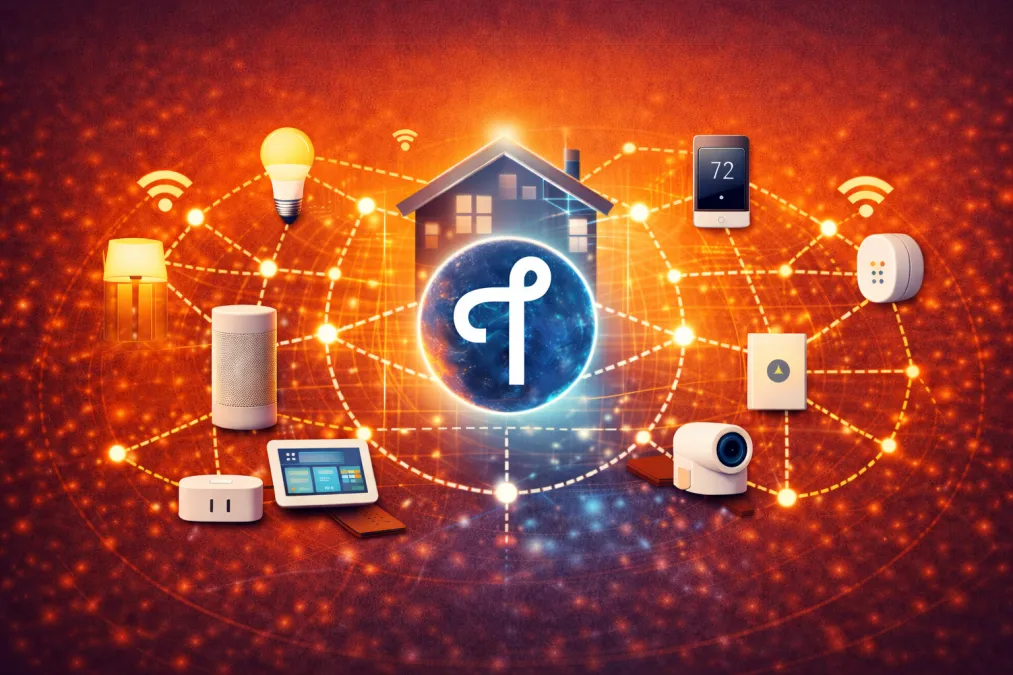
Thread Network Explained: The Future of Smart Home Connectivity
A New Foundation for Smart Homes
You've probably heard of WiFi, Bluetooth, Zigbee, and Z-Wave. Now there's Thread - a mesh networking protocol that's quickly becoming the preferred backbone for modern smart homes. Here's everything you need to know.
What is Thread?
Thread is a low-power, IP-based mesh networking protocol designed specifically for smart home devices. Unlike proprietary protocols, Thread is an open standard backed by Google, Apple, Amazon, and hundreds of other companies through the Thread Group.
Key Characteristics
- IP-based: Devices get real network addresses, simplifying integration
- Mesh networking: Devices relay messages, extending range and reliability
- Low power: Battery devices can last years
- Self-healing: Network automatically routes around failed devices
- No hub required: Just a border router (often built into existing devices)
Thread vs Other Protocols
Thread vs WiFi
| Aspect | Thread | WiFi |
|---|---|---|
| Power Consumption | Very Low | High |
| Network Congestion | Minimal | Can crowd 2.4GHz band |
| Battery Life | Years | Days to weeks |
| Range | Extended via mesh | Router dependent |
| Best For | Sensors, locks, switches | Cameras, streaming |
Thread vs Zigbee/Z-Wave
- IP-native: Thread devices have real IP addresses; Zigbee/Z-Wave need translation
- No proprietary hub: Thread uses standard border routers
- Matter support: Thread is the preferred transport for Matter
- Similar mesh benefits: All three create reliable mesh networks
How Thread Networks Work
Device Roles
Thread devices take on different roles in the network:
- Border Router: Connects Thread network to your IP network (WiFi/Ethernet). Examples: HomePod Mini, Apple TV 4K, Google Nest Hub, Amazon Echo 4th Gen
- Router: Powered devices that relay messages and extend the mesh. Most powered Thread devices act as routers.
- End Device: Battery-powered devices that sleep most of the time. Sensors, door/window contacts, etc.
Automatic Optimization
Thread networks are self-managing:
- Devices automatically find best routing paths
- If a device fails, traffic routes around it
- New devices are automatically incorporated
- Network splits recombine when connectivity returns
Getting Started with Thread
You Might Already Have It
Check if you have any of these Thread border routers:
- Apple HomePod Mini or HomePod (2nd gen)
- Apple TV 4K (2021 or later)
- Google Nest Hub (2nd gen)
- Google Nest Hub Max
- Amazon Echo (4th gen)
- Nanoleaf Elements or Shapes
- Eero 6/Pro 6 or later
Thread Devices to Consider
Growing list of Thread-native devices:
- Sensors: Eve Door & Window, Eve Motion, Aqara sensors
- Switches: Eve Light Switch, Nanoleaf Essentials
- Locks: Yale Assure Lock 2, Level Lock+
- Lights: Nanoleaf Essentials bulbs and strips
- Outlets: Eve Energy
Thread and Matter: Better Together
Thread and Matter are complementary:
- Thread is the network layer (how devices communicate)
- Matter is the application layer (what they communicate)
Matter can run over WiFi, but Thread offers significant advantages for battery-powered and always-on devices. Most Matter devices coming to market use Thread.
Troubleshooting Thread
Ensure Sufficient Border Routers
For best reliability, have multiple border routers spread throughout your home. They automatically coordinate to prevent single points of failure.
Router Device Density
Thread works best with powered devices (which act as routers) distributed across your home. These extend the mesh and ensure end devices can reach border routers.
Cross-Platform Considerations
Thread networks can span ecosystems. An Eve sensor (HomeKit) and a Nanoleaf bulb (multi-platform) share the same Thread network, improving mesh coverage even though they're managed by different apps.
The Future of Thread
Thread adoption is accelerating rapidly:
- Major manufacturers adding Thread to new devices
- Some legacy devices receiving firmware updates for Thread support
- Matter certification requires Thread support for many device categories
As your smart home grows, Thread provides a reliable foundation that works today and scales for tomorrow.
Explore Thread-compatible devices in our product guides.