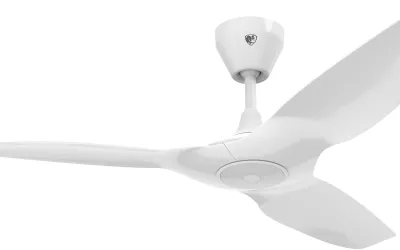
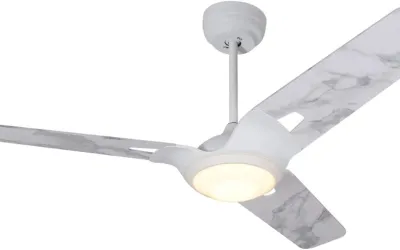
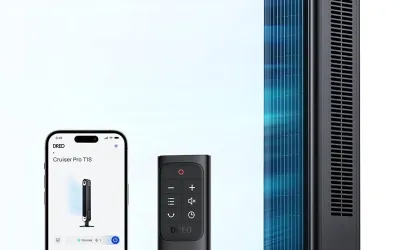
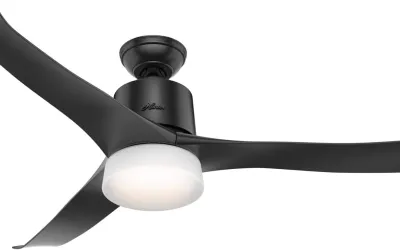
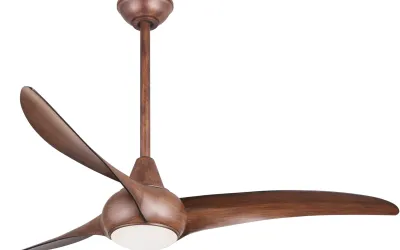
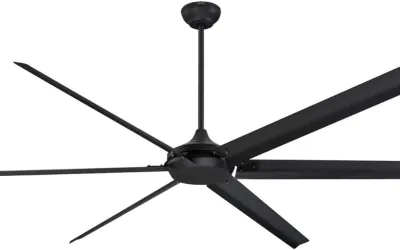
Smart ceiling and standing fans add scheduling, speed control and voice commands, and cost far less to run than air conditioning for the same felt comfort.
Fans cool people, not rooms. A fan does not lower air temperature — it moves air across skin so sweat evaporates faster. That makes a room feel several degrees cooler while it is running, and means a fan in an empty room is pure waste. It also means the highest-value automation is tying fans to occupancy rather than temperature alone.
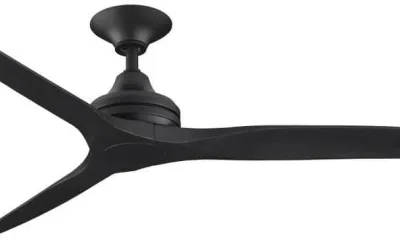
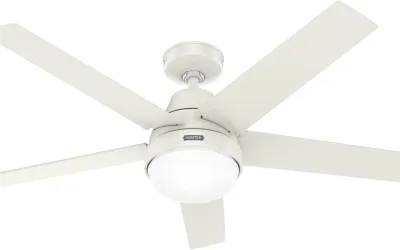
DC motors are the upgrade that matters. A DC ceiling fan draws roughly 70% less power than an equivalent AC model, runs quieter, and offers finer speed control at the low end — which is what you want overnight. The price premium typically pays back over a few summers of regular use.
Check the reverse function. Running a ceiling fan clockwise at low speed in winter pushes warm air off the ceiling back down the walls without creating a draught, which measurably reduces heating demand in rooms with high ceilings. Not every smart fan exposes reverse to the app, and a fan whose reverse is only on the remote cannot be automated seasonally.
For retrofits, confirm what the existing wiring supports. Many smart ceiling fans need a neutral at the switch, and fan speed controlled through a standard dimmer will damage an AC motor.