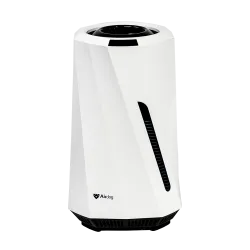
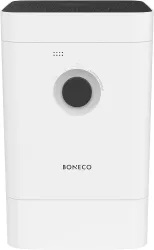
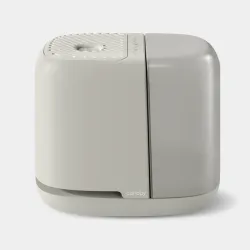
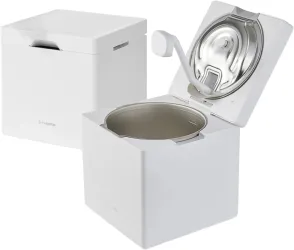
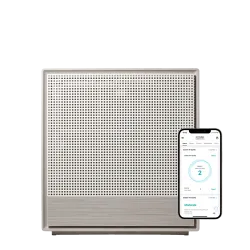
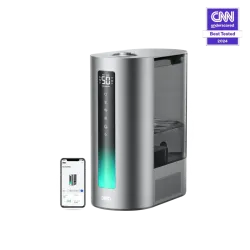
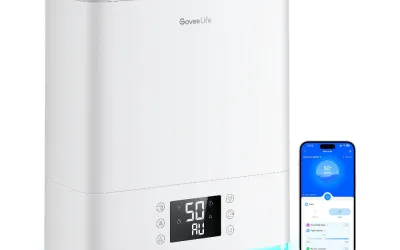
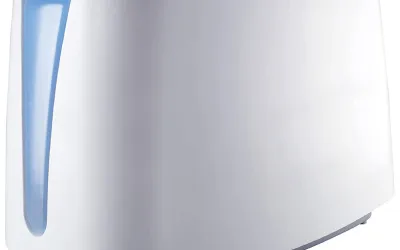
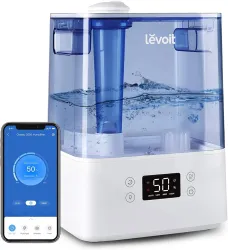
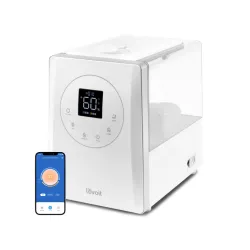
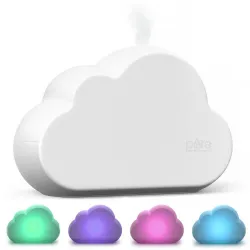
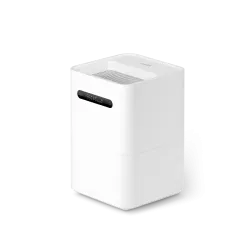
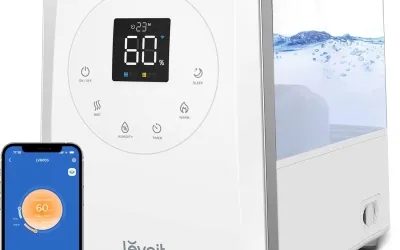
Smart humidifiers hold a target humidity automatically, which matters because both dry and damp air cause problems that are expensive to fix.
The range to aim for is 40–60% relative humidity. Below 40%, dry air irritates airways, worsens eczema and static, and shrinks timber floors and instruments. Above 60%, dust mites and mould thrive. A humidifier without a hygrostat will happily push a room past 70%, which causes more damage than the dryness it was bought to fix — this is the single most common mistake.
Evaporative versus ultrasonic. Ultrasonic models are quiet and cheap but disperse whatever is in the water, so in a hard water area they coat the room in fine white mineral dust. Evaporative models pass air through a wet wick, leaving minerals behind in the filter; they are noisier and need wick replacements, but they cannot over-humidify and produce no dust. In hard water areas, evaporative is usually the better buy regardless of price.
Maintenance is not optional. A humidifier is a warm water reservoir, and a neglected one becomes a bacterial aerosol. Tanks need emptying and drying between uses and descaling regularly. Models with a wide tank opening are far easier to clean properly, which in practice means they actually get cleaned.
For automation, pair the humidifier with an independent humidity sensor placed away from the unit. A humidifier's own sensor sits in its own output stream and consistently reads high, so it will stop short of the target for the rest of the room.