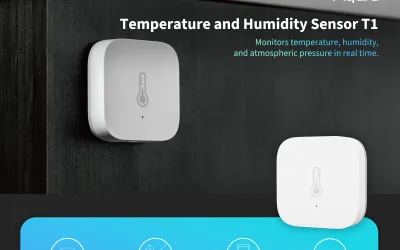
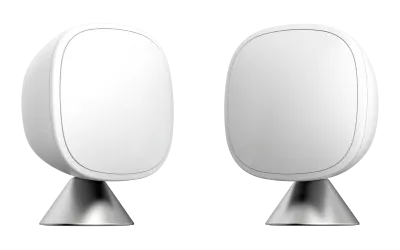
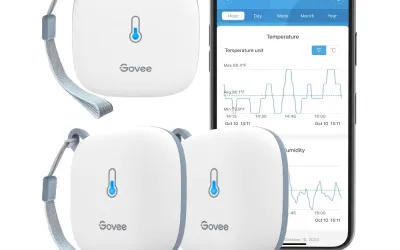
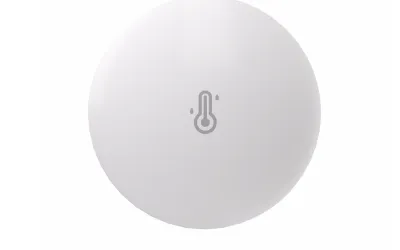
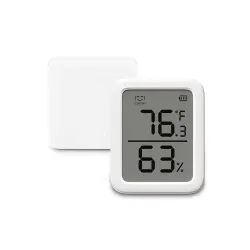
Standalone temperature sensors let heating and cooling respond to the room you are actually in, rather than the hallway where the thermostat happens to hang.
That mismatch is the reason most homes have one room that is always too warm and another always too cold. A thermostat measures its own location; a remote sensor lets the system target somewhere that matters, and most modern thermostats accept several.
Look at reporting interval and accuracy together. A sensor accurate to ±0.5°C that reports every five minutes is more useful for control than one accurate to ±0.1°C that reports hourly. Many models combine temperature with humidity, which is worth having for condensation and mould monitoring.