I needed additional door and window sensors for my apartment -- specifically for the front door, two bedroom windows, and the bathroom cabinet where I keep anything valuable. After comparing options, I went with the SmartThings Multipurpose Sensor based on its combination of open/close detection, temperature monitoring, and vibration sensing in a single compact package. Three months later, the hardware has been rock solid.
The complicating factor, as with anything Samsung touches in the smart home space, is the question of long-term platform commitment. Samsung has killed hubs, discontinued products, and pivoted strategy enough times to make anyone nervous about investing deeply in their ecosystem. The good news: if you run these through Home Assistant or another Zigbee coordinator, Samsung's corporate whims become largely irrelevant. The sensors are standard Zigbee devices that will outlast whatever Samsung decides to do next.
Design & Build
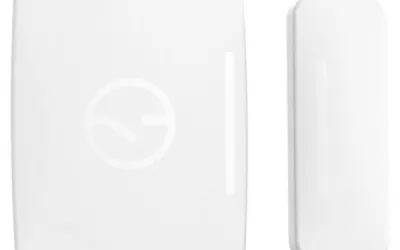
The sensor comes in two pieces: the main sensor body and a small magnet, both finished in white plastic. The main unit is roughly the size of a thick domino piece, and the magnet is slightly smaller. When placed on a white door frame or window trim, they're reasonably unobtrusive, though they're noticeably larger than the sleekest alternatives like the Aqara Door and Window Sensor, which is about half the size. The trade-off is that the SmartThings sensor packs more functionality (accelerometer, temperature) into its slightly larger body.
The 3M adhesive backing on both pieces makes installation completely tool-free, which is critical for renters like me who can't drill holes in door frames. After three months, the adhesive has held firm on every surface I've tested: painted wood trim, vinyl window frames, and a laminate cabinet door. I did make sure to clean each surface with rubbing alcohol before applying, which I'd recommend -- adhesive sticks much better to a grease-free surface.
Build quality is decent for the price point. The plastic doesn't feel premium or luxury, but it's appropriate for a $20-25 sensor that's going to sit on a door frame and be ignored. The battery compartment on the back is accessible without removing the sensor from the wall, which is a thoughtful design detail -- you can swap the CR2450 battery without disrupting the adhesive mount. The overall aesthetic is functional rather than elegant, but in practice, these sensors disappear into the background once installed.
Features
Despite the "multipurpose" branding, the primary use case for most people -- including me -- is door and window open/close detection, and the sensor does this job exceptionally well. The magnetic reed switch detects when the magnet separates from the main body and immediately reports the state change to your Zigbee hub. I have one on my front door triggering an entry notification automation, one on each bedroom window for security monitoring, and one on a cabinet.
The built-in three-axis accelerometer is what elevates this above a basic contact sensor. It detects vibration, orientation changes, and physical impact. I've configured the front door sensor to alert me to vibration events -- essentially, anyone knocking or attempting to force the door creates an alert distinct from the normal open/close event. You could also use the vibration detection for appliance monitoring: attach the sensor to your washing machine and trigger an automation when vibration stops, meaning the cycle is done.
Temperature sensing rounds out the feature set. The built-in thermometer isn't laboratory-precise -- I measured about a 2-3 degree Fahrenheit variance compared to a dedicated Aqara temperature sensor in the same room -- but it's useful for relative monitoring. I use the window sensors' temperature readings to detect cold drafts in winter. If the temperature near a window drops significantly below the room average, it might indicate a seal problem or a window left cracked.
Zigbee connectivity means these work with any compatible hub or coordinator, not just the SmartThings Hub. I run mine through Home Assistant with a SONOFF Zigbee coordinator, and every feature -- open/close, temperature, vibration, battery level -- appeared automatically during pairing. They also work with SmartThings, Hubitat, and other Zigbee 3.0 hubs.
Performance
Open/close detection is fast and reliable. When I open my front door, the state change registers in Home Assistant within about half a second -- fast enough to trigger an entry chime automation that plays before I've finished stepping through the doorway. In three months of daily use across four sensors, I have never experienced a false reading (door showing open when closed, or vice versa) or a missed event. The magnet separation distance tolerance is reasonable, roughly 20-22mm, which is generous enough to accommodate slightly imperfect sensor placement.
Battery life has been encouraging so far. After three months of continuous operation, all four sensors report battery levels between 75-85%. SmartThings claims 2+ years of battery life, and based on my consumption rate, that seems achievable. The CR2450 batteries are standard and inexpensive, available in multi-packs for a few dollars.
Vibration detection is well-calibrated out of the box. The accelerometer picks up firm knocks and impacts on the door without triggering from ambient vibrations like foot traffic, music, or general building movement. I tested this by having my wife knock on the front door at various intensities while I watched the sensor logs. Normal knocking triggered reliably, while walking past the door, closing a nearby cabinet, and playing music at moderate volume did not trigger false positives. The sensitivity threshold hits a good balance.
Zigbee range has been a non-issue in my roughly 900-square-foot apartment. Every sensor communicates cleanly with my coordinator, even the bathroom cabinet sensor that's through two walls from the nearest Zigbee router device. The sensors act as Zigbee end devices (not routers, since they're battery-powered), so they don't extend the mesh, but they've had no trouble reaching existing routers in my network.
Ease of Use
Installation couldn't be simpler. Clean the mounting surface, peel the adhesive backing, and press the sensor onto the door frame with the magnet piece on the moving door itself. The main sensor goes on the fixed frame so it stays within Zigbee range consistently. The whole physical installation takes about two minutes per sensor, with no tools, no screws, and no damage to surfaces -- perfect for renters.
Pairing with Home Assistant via my Zigbee coordinator was quick and painless. Pull the battery tab (or press the small reset button if re-pairing), and the sensor enters pairing mode. My coordinator discovered each sensor within 15-30 seconds, and all features appeared automatically as separate entities: a binary sensor for open/close, a sensor for temperature, a sensor for vibration/acceleration, and a battery level sensor. No manual configuration needed, no custom device handlers to install.
Day-to-day, these sensors are completely invisible in operation. They sit on the door frame, do their job, and never demand attention. There's no app to check (unless you want to), no status lights blinking, no sounds. The automations I've built around them -- entry notifications, window-open reminders when the heat is running, cabinet tamper alerts -- all trigger reliably in the background. My wife doesn't know or care that the front door sensor also monitors vibration and temperature; she just knows that her phone dings when the front door opens, and that's exactly the level of complexity she wants from a sensor.
Value
At around $20-25 each, the SmartThings Multipurpose Sensor is priced competitively with basic single-purpose contact sensors while offering meaningfully more functionality. A basic Zigbee door sensor from Aqara costs about $15-18, so you're paying a modest premium for the added accelerometer and temperature sensor. Whether that premium is worthwhile depends on whether you'll use those additional features -- for me, the vibration detection on the front door alone was worth the extra few dollars.
The platform risk question deserves honest discussion. Samsung's smart home track record includes killing the SmartThings Link USB dongle, discontinuing the v1 and v2 hubs, shutting down the SmartThings-branded sensor manufacturing, and periodically reshuffling the entire SmartThings software platform. If you're buying these sensors specifically for use with the SmartThings ecosystem, you should factor in the possibility that Samsung might pivot again, potentially deprecating features or changing the platform in ways that affect your setup.
However -- and this is the key point -- these are standard Zigbee 3.0 devices. If you run them through Home Assistant, Hubitat, or any generic Zigbee coordinator, Samsung's corporate decisions are irrelevant. The sensors will continue to function as long as the Zigbee protocol exists, which will be for decades. I bought mine specifically for use with Home Assistant, and in that context, the platform risk is essentially zero. The hardware is solid, the Zigbee implementation is standard-compliant, and the price is fair. As long as you're not locked into the SmartThings app as your only control method, these sensors represent good value.
Pros
- Multiple sensors in one device
- Reliable Zigbee connectivity
- Easy installation with 3M adhesive
- Good battery life
- Works with Home Assistant independent of SmartThings
Cons
- Requires a Zigbee hub
- Temperature sensor isn't highly accurate
- Samsung's smart home track record is spotty
- Larger than some competing sensors
Final Grade
The SmartThings Multipurpose Sensor is a reliable, feature-rich Zigbee sensor that does its primary job -- open/close detection -- flawlessly, while adding useful bonus capabilities in vibration sensing and temperature monitoring. After three months of daily use across four sensors, I've experienced zero false readings, zero connectivity issues, and zero maintenance headaches. The hardware is solid, the installation is renter-friendly, and the price is fair for what you get.
My one hesitation remains Samsung's track record of abandoning smart home products, but that concern is largely neutralized if you use these sensors with a platform-agnostic Zigbee coordinator rather than tying yourself to the SmartThings ecosystem specifically. Paired with Home Assistant, these are just good Zigbee sensors at a reasonable price -- and Samsung's next strategic pivot won't affect them one bit.