PIR motion sensors have been the bane of my smart home for years. Sit still at your desk for five minutes, and your office lights turn off. Settle in on the couch with a book, and the living room goes dark. The fundamental problem is that PIR sensors detect movement, not presence -- and most of what we do at home involves being present while stationary. The Sonoff SNZB-06P uses 5.8GHz mmWave radar to detect human presence even when you're completely still, and at under $25, it's transformed every room-based automation in my home.
Millimeter-wave presence detection has been available for a couple of years now, but until recently it was either expensive (the Aqara FP2 at $60+) or required DIY soldering and firmware flashing (ESP32 with LD2410 modules). The SNZB-06P hit the sweet spot of affordable, Zigbee-native, and works-out-of-the-box, which opened up mmWave presence detection to mainstream smart home users. After five months of deployment across three rooms, I'm convinced this is the most impactful budget smart home upgrade available.
Design & Build
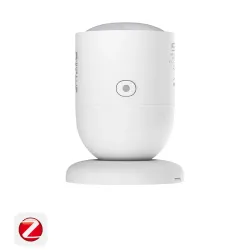
The SNZB-06P is a small white rectangle, roughly the size of a matchbox or a USB wall charger. It's not going to win any design awards, but its diminutive size makes it easy to mount unobtrusively on a wall, ceiling, or shelf bracket. The matte white finish blends with most walls and ceilings, and at typical mounting heights (7-9 feet for ceiling, 6-7 feet for wall), it's effectively invisible in daily life. Visitors to my apartment have never noticed the three I have deployed.
The sensor includes both adhesive mounting pads and screw holes for permanent installation. I used 3M Command strips for easy repositioning during the calibration phase and eventually committed to screws once I found the optimal positions. The USB-C port on the back provides constant power -- this is not a battery device, which means you need either a nearby USB outlet or a discrete cable run to a USB adapter. I've tucked USB adapters behind bookshelves and run flat USB-C cables along crown molding with cable clips. It's not complicated, but it does require some cable management thought, especially for ceiling mounts.
Build quality reflects the price point: the plastic shell is thin and lightweight, the USB-C port has minimal strain relief, and the overall feel is decidedly budget. None of this matters once it's mounted and forgotten -- you'll never touch it again after installation. The functional design is good; the aesthetic design is minimal; the material quality is what you'd expect for $20. That's a perfectly acceptable trade-off for a sensor that sits on a ceiling and does its job invisibly.
Features
The core feature is 5.8GHz mmWave radar that detects human presence through micro-movements like breathing and heartbeat -- not just the gross body movements that PIR sensors require. This means the sensor knows you're in a room whether you're walking, typing, reading, sitting still on the couch, or sleeping in bed. This single capability transforms every occupancy-based automation from unreliable ("did the PIR catch my last movement?") to trustworthy ("is anyone in this room right now?").
The radar detection works through soft materials like blankets, clothing, and thin curtains, which makes bedroom presence detection practical. My bedroom sensor reliably detects me sleeping under covers, which enables automations like keeping the HVAC running at night only while the bedroom is occupied and dimming hallway lights to nightlight levels when the bedroom shows presence after 10 PM.
Detection range is adjustable from 0 to 6 meters, and sensitivity can be tuned to prevent false triggers from adjacent rooms or outdoor movement. The detection cone is approximately 120 degrees, wide enough to cover a standard room from a corner or ceiling mount. Through Home Assistant, I can configure the occupancy timeout -- how long after the last detection before the sensor reports "unoccupied" -- from seconds to minutes, depending on the room's use case (short timeout for bathrooms, longer for bedrooms).
The integrated light sensor reports ambient illuminance in lux, which enables compound automations: turn on lights only when the room is occupied AND dark. This prevents unnecessary light activation during daytime, which is a small but meaningful quality-of-life improvement over presence-only triggers. Zigbee 3.0 connectivity ensures compatibility with most coordinators and hubs, including SmartThings, Zigbee2MQTT, and ZHA in Home Assistant. The sensor also acts as a Zigbee router, extending your mesh network -- a useful bonus for a device that's always powered.
Performance
Presence detection accuracy is excellent for the price. Across three rooms (home office, living room, and bedroom), the SNZB-06P correctly identifies human presence approximately 98% of the time in my experience. My office lights have not turned off while I'm working at my desk -- not once in five months. My bathroom lights stay on during long showers. My living room lights remain on while I'm reading quietly on the couch. These scenarios reliably failed with PIR sensors and now reliably work. That's the transformative difference.
The remaining 2% of issues fall into two categories: false positives and detection through walls. False positives occasionally occur with oscillating fans, moving curtains near open windows, and one persistent issue with a desk lamp that has a slowly rotating shade (the movement apparently registers as micro-movement at close range). Adjusting sensitivity and detection range resolved most false positives, but it took some experimentation. Detection through thin interior walls is the other edge case -- my office sensor initially triggered the hallway lights because the radar signal penetrated the drywall partition. Reducing the detection range from 6 meters to 3 meters and angling the sensor away from the shared wall solved this completely.
Response time is fast. The sensor detects presence within one to two seconds of entering the detection zone, which is quick enough that lights turn on before you've taken more than a step or two into a room. Clearing to "unoccupied" takes the configured timeout period after the last detected presence, which I've set to 60 seconds for the bathroom, 120 seconds for the office, and 300 seconds for the living room. These timeouts work well for my use cases, but they're configurable to suit different preferences.
Being USB-C powered means zero battery maintenance, which is a significant advantage over battery-powered motion sensors that need replacement every 6-12 months. The always-on power also means the sensor acts as a Zigbee router, strengthening the mesh network for other battery-powered devices. My Zigbee mesh stability improved noticeably after adding three always-powered SNZB-06P units, which reduced missed commands from battery-powered door and window sensors elsewhere in the apartment.
Ease of Use
Pairing with a Zigbee coordinator is standard procedure: hold the reset button for five seconds until the LED blinks, then initiate pairing from your hub or coordinator. In my Home Assistant setup using ZHA (Zigbee Home Automation), the sensor was discovered within 10 seconds and appeared with presence, illuminance, and configuration entities immediately. No custom device handlers, no manual configuration files, no firmware flashing. SmartThings users report similarly smooth pairing through the SmartThings hub. This plug-and-play experience is a significant advantage over DIY mmWave solutions that require soldering, flashing ESPHome firmware, and configuring YAML files.
The real setup effort is finding the optimal mounting position. The radar detection cone, sensitivity settings, and mounting angle all interact to define the effective detection zone, and getting this right requires experimentation. I spent about 30 minutes per room testing positions: mounting height, angle, sensitivity level, and detection range. The process involves mounting the sensor, walking around the room to test detection, sitting still in various positions to test presence holding, then adjusting settings through Home Assistant and repeating. It's not complicated, but it's iterative, and rushing it leads to either false positives (detecting through walls) or dead spots (missing presence in room corners).
Once the mounting position and settings are dialed in, the sensor becomes a set-and-forget device. I haven't adjusted any settings in four months, and the sensors have required zero maintenance. There are no batteries to replace, no firmware updates that require manual intervention (Zigbee OTA updates happen automatically through coordinators that support them), and no physical interaction needed. This is the ideal smart home device lifecycle: some upfront calibration effort, followed by months of invisible, reliable operation.
Value
At $18-25 depending on the retailer, the Sonoff SNZB-06P is extraordinary value for mmWave presence detection. The Aqara FP2, the most well-known consumer presence sensor, costs $60-75 and adds zone-based detection but uses WiFi rather than Zigbee. The Everything Presence One, a popular enthusiast option, runs $40-50. Commercial mmWave occupancy sensors used in building automation systems cost hundreds of dollars. At under $25, the SNZB-06P makes sophisticated presence detection accessible for every room in a home.
The practical value extends beyond the device cost. Presence-based automations reduce energy waste from lights, HVAC, and electronics left running in empty rooms. My electricity bill dropped measurably after implementing presence-based lighting across three rooms -- roughly $8-10/month in reduced lighting costs from lights that now actually turn off when rooms are empty rather than running on timers or being forgotten. At that rate, each $20 sensor pays for itself in about two months.
The deeper value is in automation quality. Before mmWave presence sensors, my smart home automations felt like a compromise -- motion timeouts long enough to avoid turning off lights while I was reading meant lights stayed on for 10-15 minutes after actually leaving a room. Now, presence detection is binary and accurate: someone's there, or they're not. This precision enables automations that were previously impractical: HVAC zoning based on actual room occupancy, security alerts when presence is detected during away mode, and media system power management tied to whether anyone is actually in the viewing area.
No subscription fees, no cloud dependency (Zigbee is fully local), and no ongoing costs beyond the negligible electricity to power the USB-C sensor. For Home Assistant users looking to upgrade their automation accuracy, three SNZB-06P sensors covering your main living spaces ($60-75 total) is the single most impactful upgrade you can make.
Pros
- True presence detection (not just motion)
- Excellent price for mmWave technology
- Zigbee 3.0 compatibility
- Works great with Home Assistant
- Adjustable sensitivity and range
- Includes illuminance sensor
Cons
- Requires USB-C power (not battery)
- Placement requires experimentation
- Can detect through walls if sensitive
- Basic build quality
- No native app (needs hub)
Final Grade
The Sonoff SNZB-06P is the most impactful budget smart home device I've tested. For under $25, it solves the fundamental limitation of PIR motion sensors -- the inability to detect stationary presence -- and enables automations that actually work the way you've always wanted them to. Lights stay on when you're reading. HVAC responds to actual room occupancy. Bathroom lights don't turn off mid-shower. These aren't flashy capabilities, but they're the difference between a smart home that frustrates you and one that works invisibly in the background.
The trade-offs are manageable: USB-C power means cable routing, initial placement requires 30 minutes of experimentation per room, and the build quality is budget-tier. None of that matters once the sensors are mounted and calibrated, because you'll never think about them again -- they just work. For anyone running Home Assistant or SmartThings with Zigbee devices, the SNZB-06P is an easy, enthusiastic recommendation. Three sensors covering your main rooms will transform your automation reliability for under $75.