Voice Assistant Comparison: Alexa vs Google vs Siri
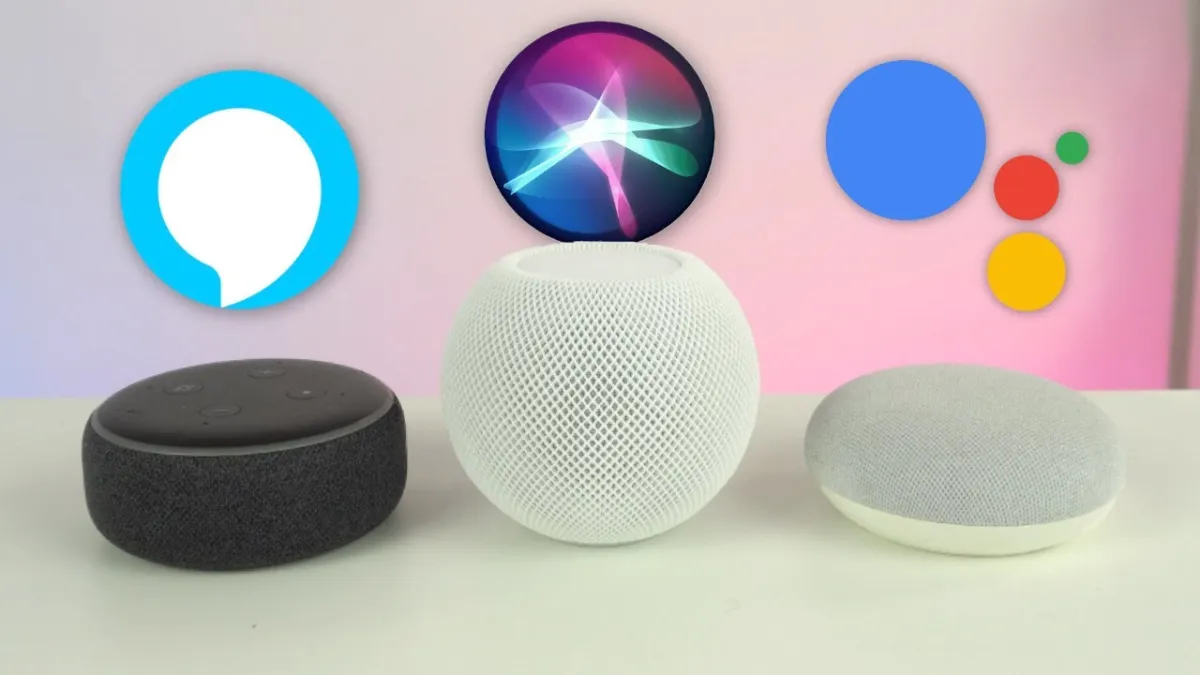
I have an Echo in the kitchen, a Nest Hub on the nightstand, and a HomePod Mini in the living room. Yes, three different voice assistants in one house. No, I don't recommend this. But it does mean I've spent years using all three daily, and I have opinions.
Here's an honest comparison based on actually living with these things, not just reading spec sheets.
Amazon Alexa
Alexa is the Honda Civic of voice assistants. It's not the prettiest, it's not the smartest, but it works with everything and it's everywhere. If a smart home device exists, it almost certainly supports Alexa. That's not an exaggeration: Alexa has the largest device ecosystem of any assistant by a wide margin.
What It Does Best
Routines are Alexa's secret weapon. You can chain together complex sequences of actions triggered by voice, time, device state, or location. My morning routine triggers off my alarm dismissal: lights come on gradually, thermostat adjusts, coffee maker starts (via smart plug), weather briefing plays, and my commute time is announced. Google and Siri can do some of this, but Alexa's routine builder is the most flexible and the easiest to set up.
Device compatibility is unmatched. I've never encountered a smart home device that didn't support Alexa. Some obscure Zigbee sensors require workarounds on other platforms; with Alexa, they just work.
The Echo hardware lineup is also the best value. An Echo Dot at $25 on sale is a no-brainer. The Echo Show 8 is a genuinely useful kitchen display. And the Echo Studio sounds surprisingly good for music.
Where It Falls Short
Alexa is not great at understanding context. "Turn on the lights" works. "Turn on the lights, actually make them a bit warmer" doesn't. You have to phrase commands in specific ways, and natural conversation isn't Alexa's strength.
The Skills system is a mess. There are thousands of Alexa Skills, but 95% of them are garbage. Finding a useful one feels like scrolling through a bad app store. And Skills from smart home manufacturers are hit-or-miss: some are well-maintained, others haven't been updated in years.
Privacy is a legitimate concern. Amazon uses voice recordings to improve Alexa and for advertising purposes. You can opt out and delete recordings, but the defaults are not privacy-friendly. If you care about this, dig into the Alexa Privacy settings in the app.
Google Assistant (Google Home)
Google Assistant is the smartest of the three, and it's not close. When you ask it a question, you usually get a direct, accurate answer. This is Google's bread and butter: they have the world's best search engine powering the responses.
What It Does Best
Natural language understanding is Google's biggest advantage. You can phrase commands in different ways and it usually figures out what you mean. "Set the living room to 70" and "make the living room 70 degrees" both work. With Alexa, you sometimes have to use the exact phrasing it expects.
The Nest Hub is the best smart display I've used. The 7-inch display shows useful information at a glance: time, weather, calendar, camera feeds. I keep one on my nightstand and it serves as an alarm clock, photo frame, and smart home controller. The sleep tracking feature (which uses radar, not a camera) is surprisingly accurate.
Integration with Google services is seamless. If your life runs on Gmail, Google Calendar, and Google Maps, the assistant pulls context from all of them. "What's my next meeting?" followed by "how long to get there?" is a natural conversation that just works.
Where It Falls Short
Google has a reputation for killing products, and Google Home hasn't been immune. Features have been removed, the app was redesigned in a way that frustrated many users, and some legacy device integrations were broken during transitions. There's always a nagging worry that Google might lose interest.
The routine builder is less flexible than Alexa's. You can create basic routines, but complex multi-step automations with conditions and variables are harder to set up. Google Home's automations improved significantly with the app redesign, but Alexa still has the edge for power users.
Device compatibility is good but not as broad as Alexa. Most major brands support Google Home, but some niche devices are Alexa-only. The gap has narrowed significantly with Matter, though.
Apple Siri (HomeKit)
Siri is the most controversial choice, and I understand both sides. On one hand, it's the most limited voice assistant for smart home control. On the other, it's the most secure, most reliable, and most tightly integrated with the devices a lot of people already carry in their pockets.
What It Does Best
Privacy is Siri's headline feature, and Apple backs it up. Voice processing happens on-device as much as possible. Recordings aren't stored by default. There's no advertising profile built from your smart home usage. If privacy matters to you, and it probably should, HomeKit is the clear winner.
Reliability is underrated. HomeKit devices respond fast and consistently. I've had fewer random "sorry, that device is not responding" moments with HomeKit than with either Alexa or Google. Part of this is Apple's strict certification requirements: only devices that meet their standards get the HomeKit badge.
The integration with iPhone, iPad, Apple Watch, and Mac is seamless in a way that only Apple can do. Long-press the home button on your Apple Watch and you have instant smart home controls. The Home app widget shows your most-used accessories on your iPhone lock screen. These aren't flashy features, but they make daily use frictionless.
HomeKit Secure Video is a standout. You can store camera footage in iCloud with end-to-end encryption, and it doesn't count against your iCloud storage quota (with a paid iCloud+ plan). The on-device object recognition can tell the difference between a person, a pet, a vehicle, and a package. No subscription fee beyond iCloud+.
Where It Falls Short
Siri is the weakest voice assistant for general knowledge questions. Ask it something complex and you'll often get "here's what I found on the web." For smart home control, Siri is competent. For everything else, it's behind.
Device selection was historically HomeKit's biggest weakness. Matter has helped enormously here: any Matter-certified device works with HomeKit out of the box. The number of compatible devices has roughly doubled since Matter launched.
HomePod speakers are expensive. The HomePod Mini at $100 is reasonable, but the full-size HomePod at $300 is a lot compared to an Echo Studio at $200. The audio quality is excellent, but the smart home features are the same as the Mini.
So Which One?
After living with all three, here's my honest recommendation:
Choose Alexa if you want maximum device compatibility, the best routine/automation capabilities, and affordable hardware. It's the safest choice for most people, especially if you're building a smart home from scratch and don't have strong ecosystem preferences.
Choose Google Home if you're an Android user, you want the smartest voice assistant, or your life is built around Google services. The Nest Hub is the best smart display available, and natural language understanding makes daily use more pleasant.
Choose HomeKit/Siri if you're already in the Apple ecosystem, privacy is a priority, and you're willing to accept a smaller (but growing) device selection for the sake of reliability and security. Matter has made HomeKit much more practical than it was two years ago.
The real answer: Matter is gradually making this choice less permanent. A Matter-compatible smart switch works with all three platforms simultaneously. As more devices ship with Matter support, you'll be able to switch assistants without replacing your hardware. Buy Matter devices when you can, and you're future-proofing regardless of which assistant you choose today.